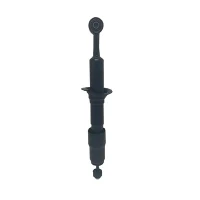
1. Installation location: The installation location of metal shock absorbers should be selected according to the needs, usually between the equipment and pipelines that need shock absorption and noise reduction, or between the equipment and the ground.
2. Operating environment: Understand the operating environment of the shock absorber, including temperature, humidity, gas composition, and circulation. If the use environment is harsh or prone to chemical etching, it is necessary to choose corrosion-resistant or corrosion-resistant shock absorbers.
3. Selection: Select appropriate metal shock absorber models and parameters, which should be calculated and selected based on equipment weight, seismic vibration, and actual working conditions.
4. Regular inspection: In order to maintain the normal operation of the shock absorber, it is necessary to regularly inspect the shock absorber. During the inspection process, attention should be paid to the wear of the shock absorber and the fastening of the sealing components. If replacement or reinforcement is found, it should be dealt with in a timely manner.
5. Correct use: Shock absorbers are precision mechanical equipment that requires normal maintenance and use. Efforts should be made to avoid excessive and excessive external impact on the shock absorber, as well as long-term use in high-frequency vibration environments.